Research
My research focuses on understanding structural behavior in traditional and novel systems through experimental testing and numerical analysis powered by high-performance computing. I work on two connected goals: developing low-damage structural systems for modern recovery objectives, and making high-fidelity nonlinear modeling a practical tool for performance-based design.
Research themes
Low-damage mass timber–steel systems
Experimental and numerical investigation of mass timber spine systems with steel buckling-restrained braces (BRBs). This includes a three-story pivoting mass ply wall test at Oregon State University and six-story post-tensioned rocking wall shake-table testing at UC San Diego as part of the NHERI Converging Design project. Key publication: cyclic testing and JSE article on the three-story building (Araújo R. et al., 2025).
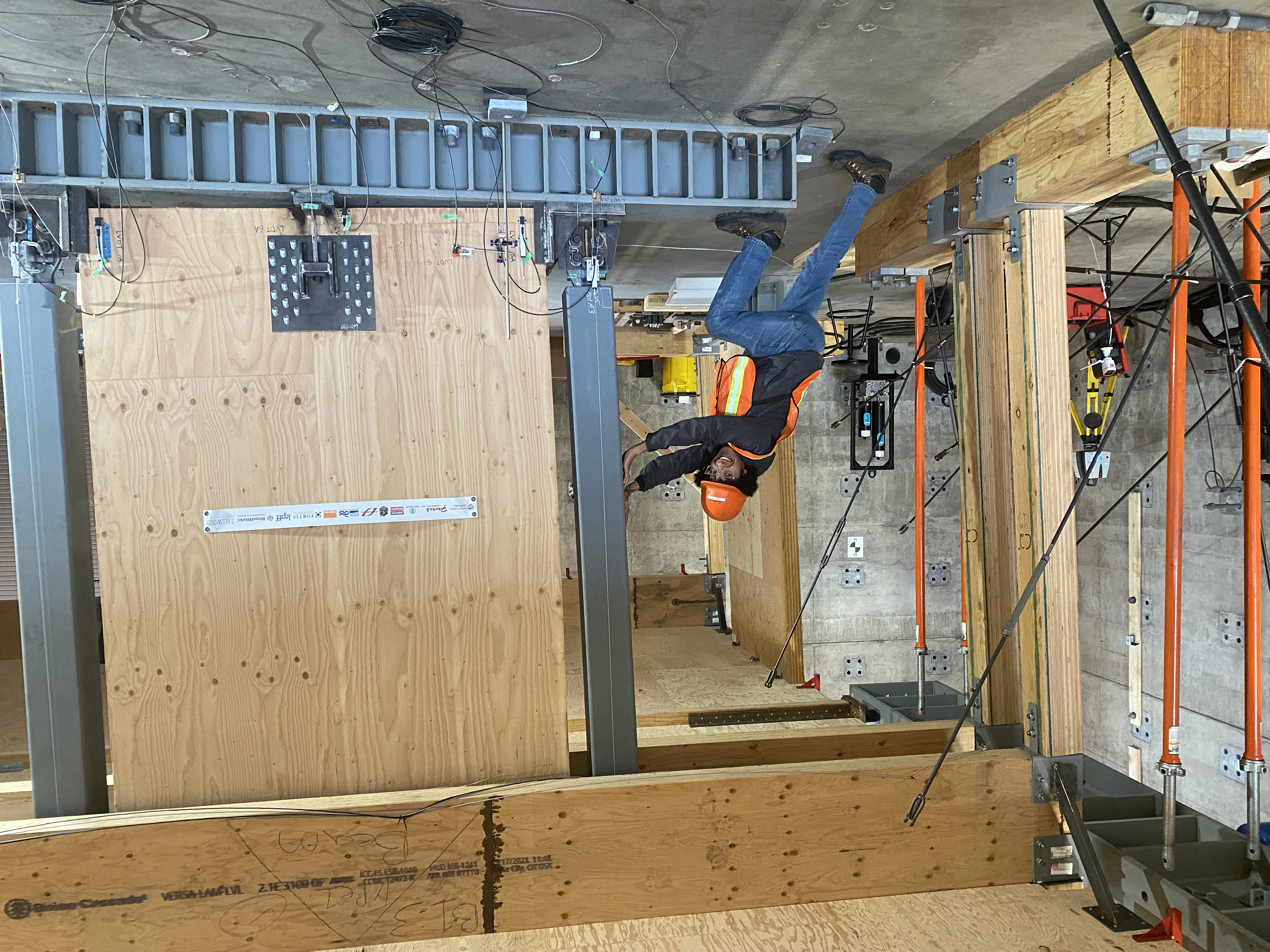
OSU structural laboratory, November 2022.
Reinforced concrete walls and frame–wall structures
Development and validation of nonlinear models for thin, lightly reinforced concrete walls common in northern South America. Past work includes hybrid truss–fiber models for shear–flexure interaction (Arteta et al., 2019), seismic risk assessment of TLRCW building typologies, and post-earthquake studies of mid-rise RC frame buildings (Arteta et al., 2019).
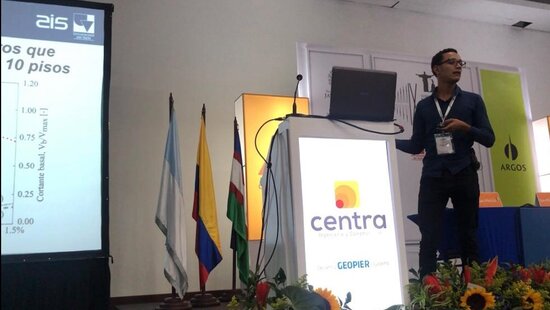
MS thesis presentation, Universidad del Norte (press coverage).
Nonlinear finite-element analysis & OpenSeesPy
Building reproducible analysis workflows for nonlinear static and dynamic simulation using OpenSees and OpenSeesPy. See Examples for code-oriented notes and teaching materials, including an older Spanish-language OpenSees workshop series.
GPU-accelerated computing
Adapting GPU-based methods to structural analysis to reduce computational cost of high-fidelity nonlinear simulations. This includes work presented at the 2024 and 2026 NHERI Computational Symposia on GPU-accelerated finite-element analysis.
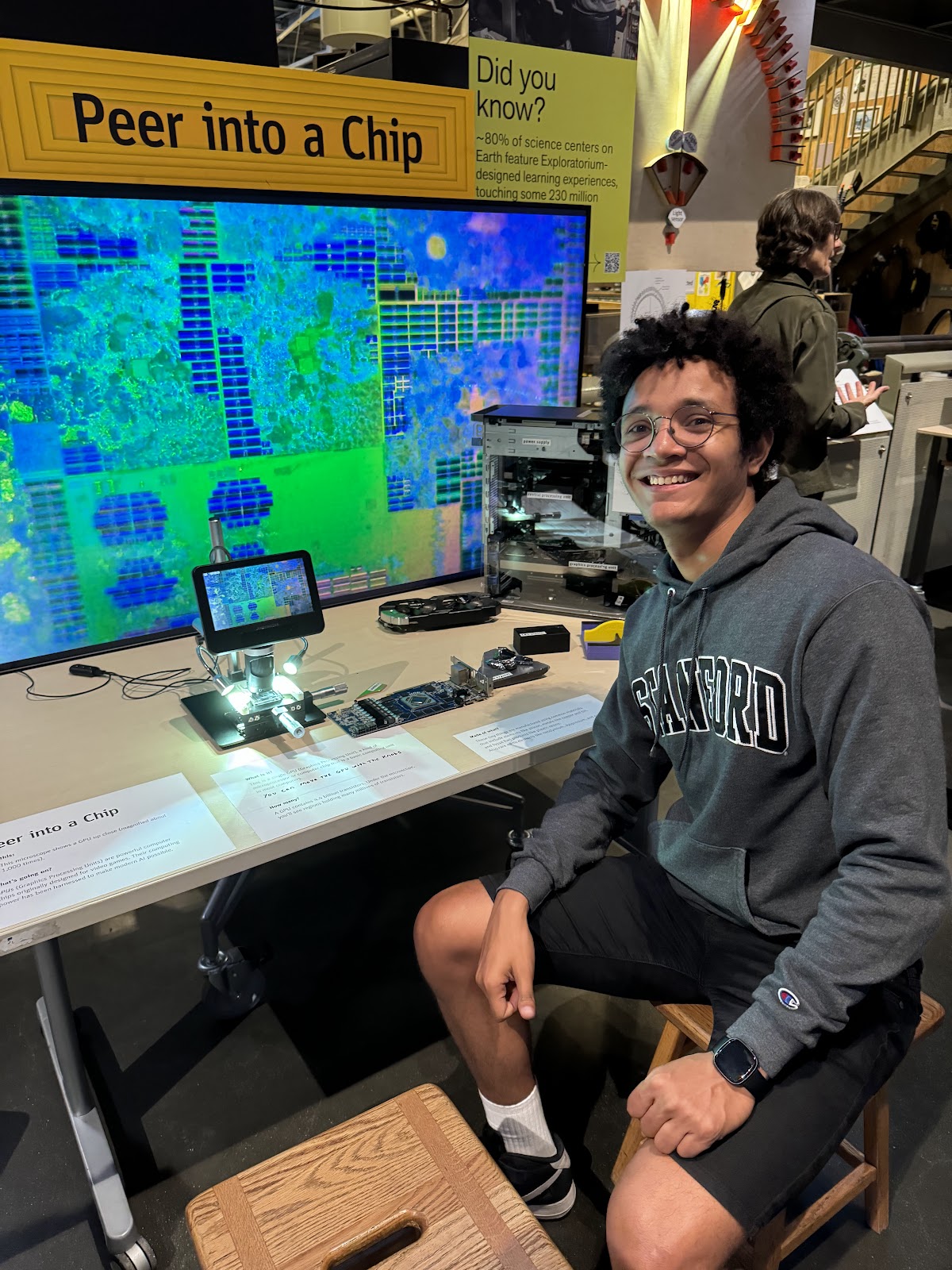
Exploratorium, San Francisco — GPU computing (active research).
Seismic hazard, fragility & risk
Probabilistic assessment of building performance, fragility functions, and risk metrics for RC and timber systems in high-seismicity regions—including post-earthquake reconnaissance in Colombia and the 2025 EERI Learning From Earthquakes Travel Study in Mexico City.
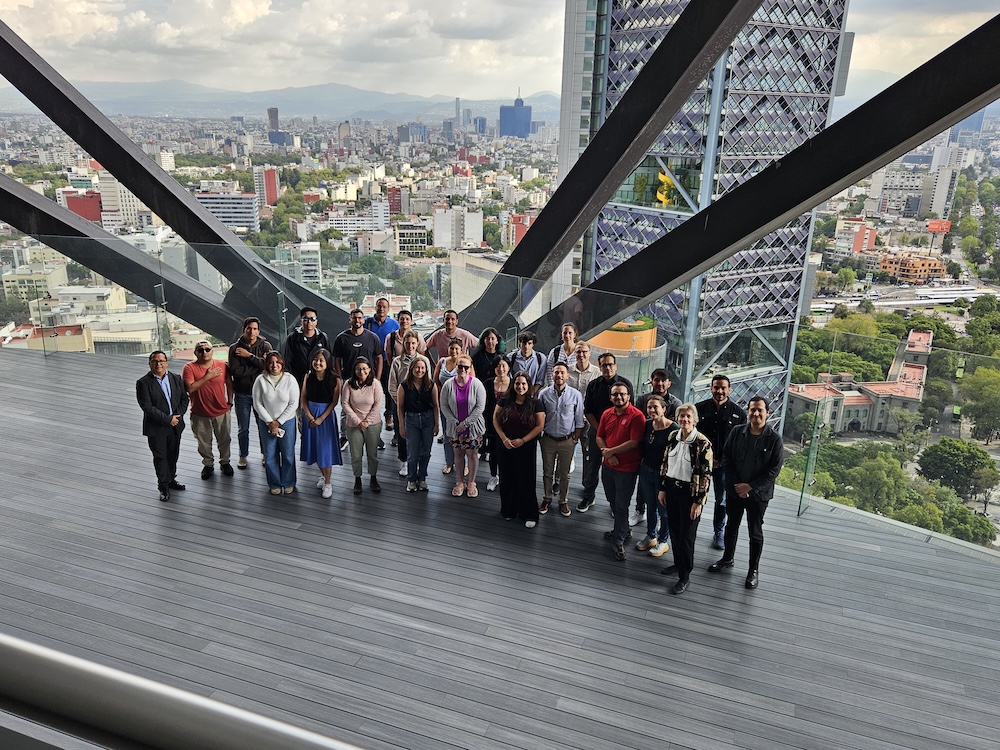
EERI LFE Travel Study, Mexico City, 2025.
Tools & methods
| Tool / Method | Application |
|---|---|
| OpenSees / OpenSeesPy | Nonlinear pushover, cyclic, and dynamic analysis |
| CUDA / GPU computing | Sparse linear solvers, parallel assembly |
| Python / NumPy / SciPy | Pre/post-processing, optimization, ML workflows |
| Fragility & risk analysis | Performance-based earthquake engineering |
Collaborations
I have collaborated with researchers at Stanford, Oregon State University, Universidad del Norte, UC Berkeley (PEER), UC San Diego (NHERI), University College London, Simpson Strong-Tie, and NIST, among others. A full publication list is on the Publications page.
Ongoing projects
Browse Projects for descriptions of current and completed work, including GPU-accelerated OpenSees extensions, the OSU three-story pivoting wall test, and the NHERI Converging Design six-story shake-table experiment.
Get involved
If you are interested in collaboration, code review, or discussing OpenSees/GPU workflows, feel free to contact me.